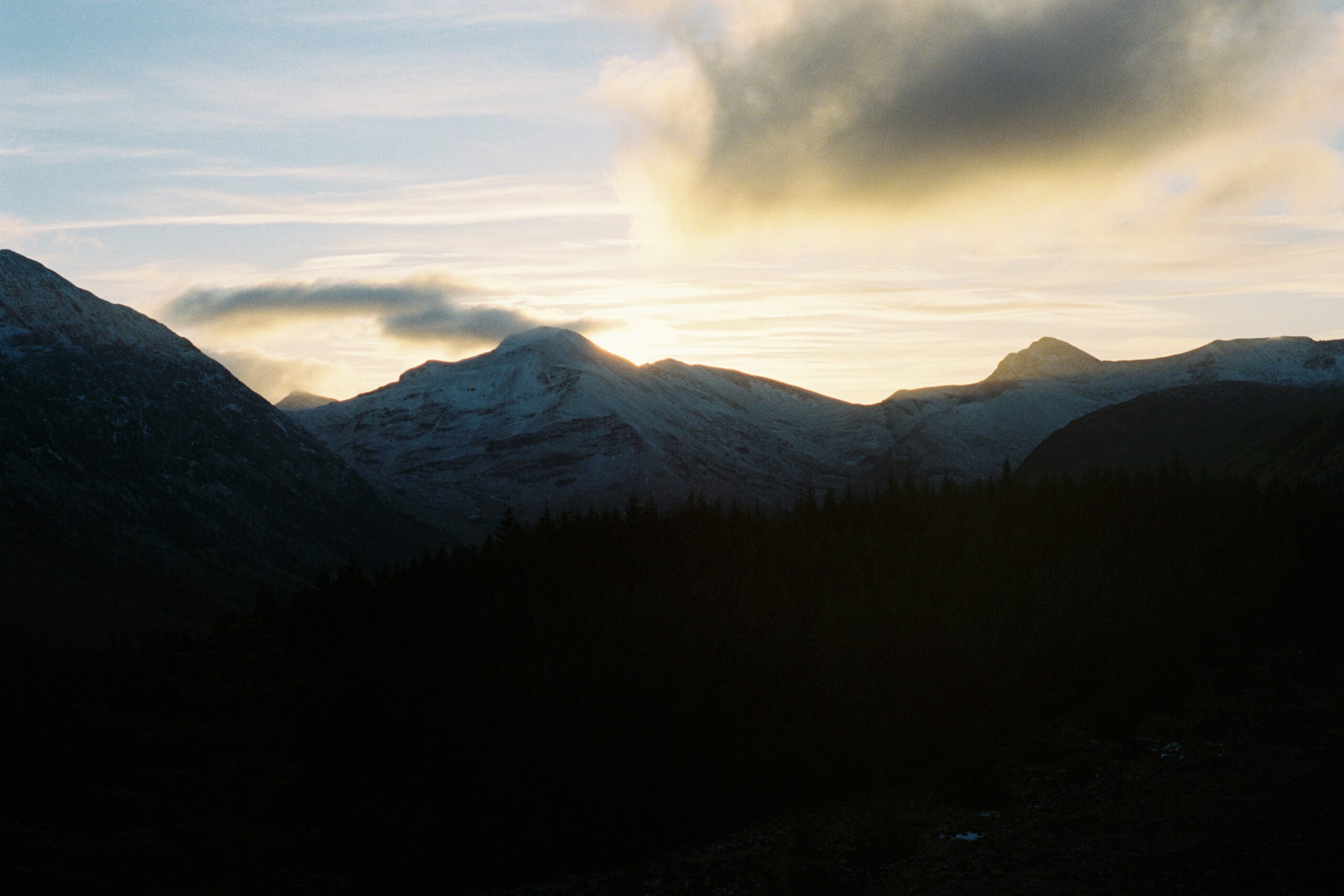
The first time I slept in a bothy, it was cold and wet and grim – a bog-soaked tangle by a woodless fireplace. Out of desperation, my friends and I burned a book, gasping for a flicker of heat. It disappeared far too soon. At night, the door bolt rattled like a poltergeist.
It didn’t keep me from coming back, because there was something fascinating about these stone shells in the Scottish wilderness. For centuries they have provided shelter for the drover, the stalker, the wanderer.
Over time, the simple huts started feeling cosier – whether it was the big couch, the company, or simply the warm fire. They became my tiny homes on my trekkings through the Highlands.
Bothies are a place of spirituality, of celebration. In his album Bothy Culture, Martyn Bennett even compares bothies to a dance floor, that can transform from four bare walls upon arrival into a delight for the senses. For me, this delight takes the form of a dram of whisky burning my throat and the crackling of a fire. I’ve never danced in a bothy, I should try that sometime. To the song of the wind and the river flow.

My friend Pepijn has not been back to a bothy since our infamous first trip. I have taken it upon myself to immerse him in the true bothy culture.
I don't succeed right away. At dusk, we step into Tomsleibhe bothy on the isle of Mull. We have to open three creaking doors to enter one of the three dormitories.
‘What a spooky place,’ Pepijn says.

On harsh winter days in the past, I couldn’t imagine a more welcome place. Because of that, I had forgotten what a bothy looks like at first glance to a stranger: like a haunted ruin. We walk back and forth between the different rooms to choose our space for the night. Two spacious chambers with a fireplace, one small one in between with only a sleeping platform for two. It takes us a while to understand why the left chamber appeals to both of us more. The other one has a bookcase and a painting on the wall – yet there is something cold about the place. Later we realize the room misses a second window, which made us feel trapped there.
So far Pepijn is not feeling it, the bothy magic. Warnings in the visitors book about a dead sheep upstream aren’t helping either, even less when I discover I’ve forgotten my water filter. With torches we scour the riverbank. There are lots of sheep about, which doesn’t say much for the water quality, but luckily we don’t see any dead sheep. So we take the risk; we need to drink water after all, although we boil it thoroughly first.

But Pepijn starts getting it, once the cheesy ravioli is prepared, the whisky flask is opened, and our feet are toasting by the hearth. The hut has snugged up. We read the tales of past bothy-goers, and write ourselves of the buzzards in the glen and the craggy peaks we’ll climb tomorrow, now fables in the dark. Our socks have stayed dry in Mull’s bog, so there’s nothing that needs drying. The fire is all ours.

How I miss that fireplace two months later, when I’m in Gameshope bothy in the Southern Uplands. To get here I’ve cycled 50 km against wind gusts of 60 km/h – the aftermath of storm Bram. In the last 15 km, horizontal rain was added to this, but then I knew I was almost there. Almost then, because the last kilometers turned the trip into another epic: facing impassable kissing gates, dying bike lights and a wild river crossing. Not to mention the wind. It has proved again to be man’s greatest enemy. It can throw you off a cliff, freeze you, and there’s nothing you can do about it.
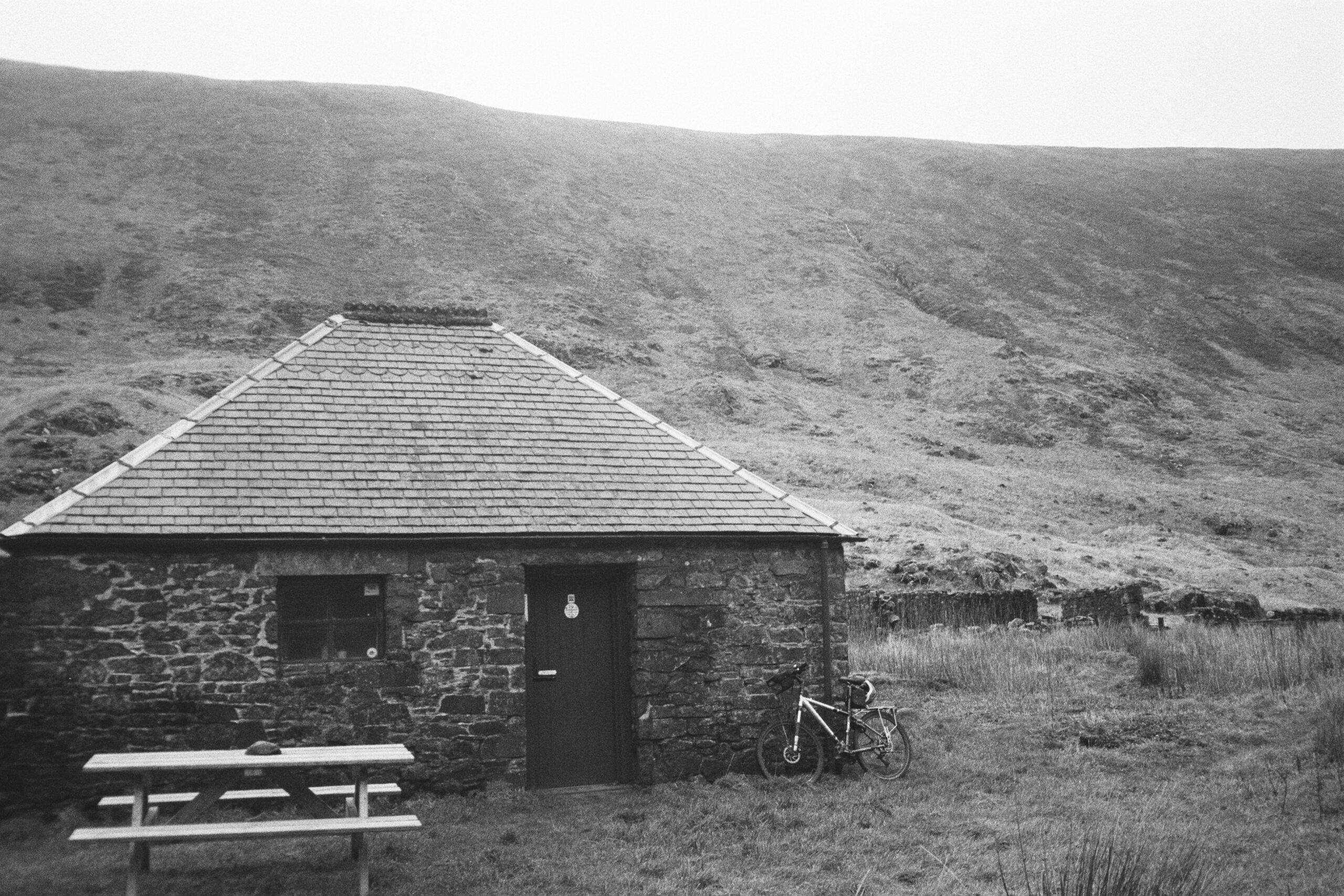
This time I do wonder if it’s worth it, this primitive, hearthless bothy. Tomorrow morning I’ll be greeted with sunshine on White Coomb (821 m), if Scotland is in good spirits. That’s the thought I cling to. It takes a bit of imagination to make this bothy feel cosy. Two windows, a table and a few rusty chairs. The only spark of colour are Nepalese flags hanging from the ceiling. Once I’ve filled my belly, hung up my lamps and tucked myself into my sleeping bag reading a book, I start to see it more. Besides, Gameshope really is my salvation from the wind.


But the sun doesn’t doesn’t show up, and neither does White Coomb. In the morning, I climb the steep slope of Great Hill (774 m). Down in the valley, the wind has died down, and I am hopeful. But on the hill crest it returns with full force. I march over the plateau, with White Cloomb’s flank in view. The top is not far away, but I’m in a hurry – I have another 50 km to cycle today if I want to get home. When I’m almost there, the summit hides aptly behind white clouds. Meanwhile, the wind is busy chilling my wet body – to get here I had to cross Games Hope Burn again, this time thigh-deep. I decide to turn back. The hills are merciless today. But days like these must exist so we keep appreciating the good ones.
Last night's rain has swollen the burn and I don’t dare to push my loaded bike across. So I go back and forth thrice to get all my stuff across. I am thankful for my frequent plunges in the sea – I hardly feel the cold of the water. Just as I’ve repacked my bike, put on dry clothes and am about to leave, the cloud cover opens briefly. What a beautiful place, Gameshope’s pointed roof and swirling river, sparkling in the sun.

Every bothy, no matter how cold I was, or how lonely I felt, remains in my memory as a warm embrace. There, heat steams off my skin, songs echo through the night and the floors glisten in moonlight. In bothies, time stands still and I dance a cèilidh with the hill spirits.

Leave a Reply